Many analysts over the past week have said the RBI has legroom to cut rates to the tune of 65 bps by June and some like Barclays and BofA have also spoken about the likelihood of an inter-meeting cut.

The Reserve Bank of India (RBI) will maintain the policy repo rate at 6.5 per cent during its upcoming June 8 announcement, considering the easing of retail inflation in April and the potential for further decline, indicating the effectiveness of previous policy rate actions, anticipate experts. Headed by Reserve Bank Governor Shaktikanta Das, a meeting of the six-member Monetary Policy Committee (MPC) is scheduled for June 6-8. The decision of the 43rd meeting of the MPC would be announced on Thursday, June 8.

This is the first hike in about a decade, signaling a recovery.

Concerned over elevated inflation, Reserve Bank of India on Friday decided to leave the benchmark interest rate unchanged at 4 per cent but maintained an accommodative stance, implying more rate cuts in the future if need arises to support the economy hit by the Covid-19 pandemic.

Inflation to peak in the current quarter within tolerance band, moderating in the second half of next fiscal, says central bank.

The services sector growth in India rose to a 13-year high in September on sharp increase in new business amid strong demand conditions, and job numbers continued to increase as overall business mood improved, a monthly survey said on Thursday. The seasonally adjusted S&P Global India Services PMI Business Activity Index rose from 60.1 in August to 61 in September, signalling a sharp upturn in output. In Purchasing Managers' Index (PMI) parlance, a print above 50 means expansion while a score below 50 denotes contraction.
For five consecutive policy reviews in 2023, the Reserve Bank of India (RBI) chose to hold rates, citing inflation threat. And when the prices did cool off a bit, it reminded all about the target to get the headline consumer price inflation at 4 per cent and the risks from food inflation. Heading into the new year, all eyes are on when RBI will cut the rates, especially after one of the Monetary Policy Committee (MPC) members stressed on the need for such an action in the face of the US Federal Reserve's guidance for easing rates.
In the second policy review under Governor Shaktikanta Das, the six-member Monetary Policy Committee voted 4:2 in favour of the rate cut.

The Reserve Bank of India (RBI) on Friday kept the key repo rate unchanged at 4 per cent in view of rising inflation and faint signs of economic growth amid the gradual lifting of coronavirus related countrywide lockdown.

ICICI Bank was the top gainer in the Sensex pack, rising around 3 per cent, followed by Axis Bank, HDFC twins, SBI, L&T, ONGC and Infosys. On the other hand, Sun Pharma, Asian Paints, Nestle India, UltraTech Cement and HUL declined. NSE Nifty rose by 79.60 points or 0.67 per cent to 11,914.20.

RBI Governor Shaktikanta Das has assured Finance Minister Nirmala Sitharaman that the Rs 12.05-trillion gross borrowing programme for FY22 will go through smoothly.

Shaktikanta Das said in Washington, DC, that there was nothing sacrosanct about the 25 bps rate cut and that monetary policy could be well served by calibrating the size of the policy rate to the dynamics of the situation, and the size of the change itself could convey the stance of policy.

Dr T V Somanathan is the first finance secretary to be appointed Cabinet secretary since 1985. His appointment at this juncture seems to carry much meaning for the forthcoming trajectory of reforms and restructuring of India's steel frame.

The RBI has doubled the limit of maximum balance that an individual customer can hold with payments banks to Rs 2 lakh from Rs 1 lakh earlier with immediate effect to expand the ability of such lenders to cater to the needs of MSMEs and other businesses.

'The RBI's MPC will maintain the current policy rates (6.50%) at the policy meeting, given ongoing inflationary pressures.'

From the Sensex pack, Mahindra & Mahindra, Bajaj Finserv, IndusInd Bank, Tata Motors, Tata Steel, Larsen & Toubro, Axis Bank and NTPC were among the major laggards. UltraTech Cement, Infosys, Asian Paints, Kotak Mahindra Bank, Sun Pharma and Bharti Airtel were the winners.
Monetary Policy Committee keeps key interest rate (repo) unchanged at 4% for 7th consecutive time; Consequently, reverse repo rate too remains unchanged at 3.35%; Bank rate also remains same at 4.25%;
RBI Governor Shaktikanta Das on Tuesday asked private sector banks to ensure continuity in the provision of various financial services, including credit facilities to individuals and businesses, in the face of challenges brought on by the pandemic. Earlier this month, the governor had held a similar meeting with MD and CEOs of public sector banks. During the meeting with the MD and CEOs of select private sector banks, Das also impressed upon the banks to quickly and swiftly implement the measures announced by the RBI on May 5, 2021, in right earnest.
Reserve Bank will have to constantly re-assess the "dynamic and fast changing situation" and tailor its actions accordingly, Governor Shaktikanta Das said during the recent meeting of the Monetary Policy Committee (MPC) which decided to maintain status quo on key interest rate. According to the minutes of the six-member MPC meet released by Reserve Bank of India (RBI) on Friday, the five other members had also expressed a similar opinion amid the ongoing Russia-Ukraine conflict's impact on the global and domestic economies. MPC, which held its meeting from April 6-8, unanimously decided to keep the borrowing costs unchanged at a record low for the 11th time in a row in a bid to continue supporting economic growth despite inflation edging higher in the aftermath of Russia-Ukraine conflict.

The highlights of the RBI's fourth monetary policy review of fiscal year 2022-23 announced by Governor Shaktikanta Das.
The Reserve Bank on Wednesday projected inflation to come down below the upper threshold level of 6 per cent by March quarter of the current fiscal. RBI Governor Shaktikanta Das said the central bank will keep 'Arjuna's eye' (focus) on the evolving inflation dynamics and will remain 'nimble and flexible' to deal with the price situation. Global commodity prices, including crude oil, have undergone some downward correction, but uncertainty continues to surround the near-term outlook in view of the prolonging geo-political hostilities. Moreover, the resurgence in domestic services sector activity could also lead to price increases, especially as firms pass on input costs.

Wholesale price-based inflation rose to an eight-month high of 0.26 per cent in November, driven by a sharp jump in food prices, especially onion and vegetables. The WPI inflation was in the negative or deflationary zone for the past seven months since April and was at (-)0.52 per cent in October. The last positive WPI inflation was recorded in March at 1.41 per cent.

Moody's Ratings on Thursday raised India's GDP growth forecast for FY24 to around 8 per cent from 6.6 per cent on the back of strong domestic consumption and capital expenditure. The estimate comes a day after RBI Governor Shaktikanta Das said the economic growth in the current financial year could be close to 8 per cent in view of the third quarter GDP data released by the government. The latest estimate of Moody's is about 140 basis points higher than the earlier projection of 6.6 per cent made in November 2023.
Reserve Bank on Wednesday said it expects retail inflation at 5.2 per cent in the first half of the current fiscal and revised downwards the target to 5 per cent for the quarter ended March. While headline inflation at 5 per cent in Feb 2021 remains within the tolerance band, some underline constituents are testing the upper tolerance level. Going forward, the food inflation trajectory will critically depend on the temporal and special progress of southwest monsoon in the 2021 season, RBI Governor Shaktikanta Das said on Wednesday while announcing the first monetary policy for the current fiscal. Reserve Bank of India (RBI) has kept the key repo rate unchanged at 4 per cent to support growth in the current situation.

The rupee tumbled 3 per cent against the US dollar in 2024 as concerns over slower economic growth and a stronger greenback in global markets weighed, but it was among the least volatile currencies in the world and the headwinds may be less intense in the coming year.

RBI Governor Shaktikanta Das on Tuesday launched a new service, which will enable over 40 crore feature phone users to undertake digital payments in a secure way. The service christened UPI (unified payments interface) '123PAY' is a three-step method to initiate and execute services for users which will work on simple phones which do not have an internet connection. Das said, as of now, the multifaceted features of UPI are mostly available only on smartphones, which excludes people from the lower rung of the society from an economic perspective, especially in the rural areas, from accessing the popular service, even though the smartphone prices are going down.

It will be the second Budget of the Modi 3.0 government and eighth straight Budget for Nirmala Sitharaman, rare in Indian polity.
Amid a debate on the basis of a monetary policy stance, one may be curious enough to know how non-food retail inflation has behaved over the years in India. Let the eager souls catch a glimpse of facts. In the past 10 years, non-food inflation came down below 4 per cent on two occasions - pre-Covid period of 2019-20 and now in the first four months of the current financial year (FY25).

The country's foreign exchange reserves surged by $5.271 billion to touch a record high of $598.165 billion in the week ended May 28, RBI data showed on Friday. In the previous week ended May 21, 2021, the reserves had increased by $2.865 billion to $592.894 billion. While announcing the second bi-monthly monetary policy review earlier on Friday, RBI Governor Shaktikanta Das said the country's forex reserves may have crossed $600 billion currently.

In FY24, loans given out by such firms had topped a whopping Rs 146,517 crore, up by 49 per cent year-on-year and spread over 10.19 million accounts (up 35 per cent).
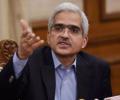
The Reserve Bank of India Governor Shaktikanta Das on Monday said that the "momentum of inflation is on a downward slope" and the central bank would continue to strike a delicate balance between the need to contain price rise and ensure economic growth. The Reserve Bank's inflation projections, Das said, are "robust" but contingent on downside and upside risks associated with the movement of global crude oil prices. The RBI takes into account a particular range within which crude prices are expected to fluctuate considering all the factors that can be anticipated and that can be sort of foreseen as of today, he said.
With concern on food inflation ebbing with the monsoon progressing well, the Reserve Bank of India (RBI) is warming up to the idea of a change in stance to "neutral" from "withdrawal of accommodation", according to economists. In his speech on Thursday during the annual event of the Federation of Indian Chambers of Commerce and Industry-Indian Banks' Association, RBI Governor Shaktikanta Das said: "The balance between inflation and growth is well-poised."

With Deputy Governor Viral Acharya and another member Chetan Ghate voting for a status quo, RBI governor Shaktikanta Das and three others outvoted them for reduction in repo rate to 6.25 per cent from the existing 6.50 per cent.

All six members of the Reserve Bank of India's (RBI's) monetary policy committee (MPC) expressed caution over food inflation during the December review, while two external members warned about high real interest rates as headline inflation approaches its target of 4 per cent. The central bank continued to maintain the status quo on both the repo rate and the stance in the December monetary policy. India's retail inflation in November rose to 5.5 per cent - its fastest pace in three months - due to higher food prices.

RBI Governor Shaktikanta Das and Finance Secretary Subhash Chandra Garg are also expected to attend the meetings.

Banks submitted bids amounting to Rs 4.75 trillion, around 2.5 times of the notified amount of Rs 1.75 trillion, at the Variable Rate Reverse Repo (VRR) auction conducted by the Reserve Bank of India (RBI) on December 22, a day after the liquidity deficit in the banking system widened to Rs 2.5 trillion. In the most recent VRR auction held by the RBI on December 15, bids totaling 2.7 times the notified amount were received. Banks secured Rs 1 trillion at a weighted average rate of 6.63 per cent.

The recent depreciation of the rupee along with sharp fall in the country's foreign exchange (FX) reserves has sparked a debate whether stability of the exchange rate is necessary and desirable. The rupee was one of the least volatile currencies among peers for almost two years before the current downward pressure started in September after the US Federal Reserve lowered interest rate.
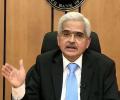
The Reserve Bank is unlikely to cut the benchmark interest rate in its forthcoming bi-monthly monetary policy review later in the week as retail inflation is still a cause of concern, and there is a possibility of the Middle East crisis deteriorating further, impacting crude oil and commodity prices, say experts.

Several mutual funds (MFs) have recently approached the Reserve Bank of India (RBI) as they renew efforts to increase their overseas investment limit. In June 2022, the capital markets regulator Securities and Exchange Board of India (Sebi) permitted MFs to invest in foreign stocks within the aggregate mandated limit of $7 billion after a correction in stocks. One of the proposals shared with the RBI is to link MFs' foreign investment limit to the country's foreign exchange reserves.

Bond market participants expect an open market operation (OMO) auction in the first week of November as the banking system liquidity is expected to ease on the back of government spending and maturity of bonds. According to market participants, the Reserve Bank of India (RBI) will issue a notification on OMO sales by October 31. They speculate that the central bank might conduct the auctions in multiple tranches of Rs 10,000 crore.
